
"coffee growth process"
9000 article(s) found
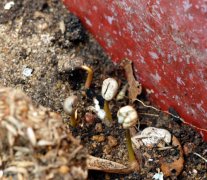
The growth process of coffee trees
The bud that has just emerged looks like it is ready to bloom. The seed next to the beginning of the newborn life has already sprouted, two beautiful young leaves, the small bud next to it needs refueling, it will sprout and grow leaves soon. Now the bud is not high, it is estimated to be only five or six centimeters.
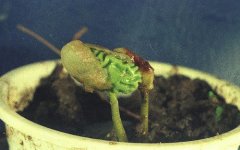
Let me share with you the growth process of coffee (with photos)
The germinated seedlings were harvested in maturity after two years of flowering and fruiting.
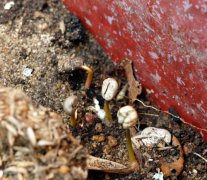
The growth process of coffee trees
The bud that has just emerged looks like it is ready to bloom. The seed next to the beginning of the newborn life has already sprouted, two beautiful young leaves, the small bud next to it needs refueling, it will sprout and grow leaves soon. Now the bud is not high, it is estimated to be only five or six centimeters.

The most ideal climatic conditions for the growth of coffee beans in India the main variety of coffee in India is Robusta.
Professional coffee knowledge exchange more coffee bean information Please follow the coffee workshop (official Wechat account cafe_style) the ideal climatic conditions for the growth of coffee beans in India are temperature between 23 to 28 degrees Celsius, rainfall between 1.5m and 2.0m, and a dry season of 2-3 months after the rainy season. The cold temperature near freezing point is not suitable for growing coffee. Although the rainfall in southern India is less than 1.

Coffee growth knowledge Coffee growth habits
Coffee is a kind of drink, which gives the public the impression that it is black, bitter, sleepless and excited. The coffee beans we see in the coffee shop are tea-brown, which belongs to roasted coffee beans, while the color of the coffee liquid is amber. Coffee comes from coffee beans, which are harvested and processed from the fruit of trees. The growth habit of coffee: coffee

Coffee growth knowledge Coffee growth habits
Coffee is a kind of drink, which gives the public the impression that it is black, bitter, sleepless and excited. The coffee beans we see in the coffee shop are tea-brown, which belongs to roasted coffee beans, while the color of the coffee liquid is amber. Coffee comes from coffee beans, which are harvested and processed from the fruit of trees. The growth habit of coffee: coffee

Planting conditions and environmental methods of coffee trees require the growth process of fruit coffee cherries
Coffee is a perennial evergreen shrub or small tree of Rubiaceae. It is a horticultural perennial cash crop with the characteristics of fast growth, high yield, high value and wide market. Wild coffee trees can grow to a height of 5 to 10 meters, but coffee trees planted on the manor are often cut to a height of less than 2 meters in order to increase the amount of fruit and facilitate harvesting. The opposite leaves of coffee trees are long oval.

Characteristics of growth process in Arabica Coffee planting area
Professional coffee knowledge exchange more coffee bean information please follow the coffee workshop (Wechat official account cafe_style) Coffee tree is a genus of Rubiaceae in botany. The classification of coffee trees is very complex, there are many species, diversity and varieties. Different varieties of coffee beans have different tastes, but even for the same variety of coffee trees, due to different soils and different gases

Introduction to the structure diagram and growth process of coffee bean structure roaster
The harvested coffee berries need further treatment, usually in two ways. Then there is the Qing Dynasty.
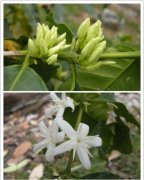
The growth and change of coffee fruit the color change of coffee in a lifetime
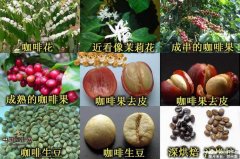
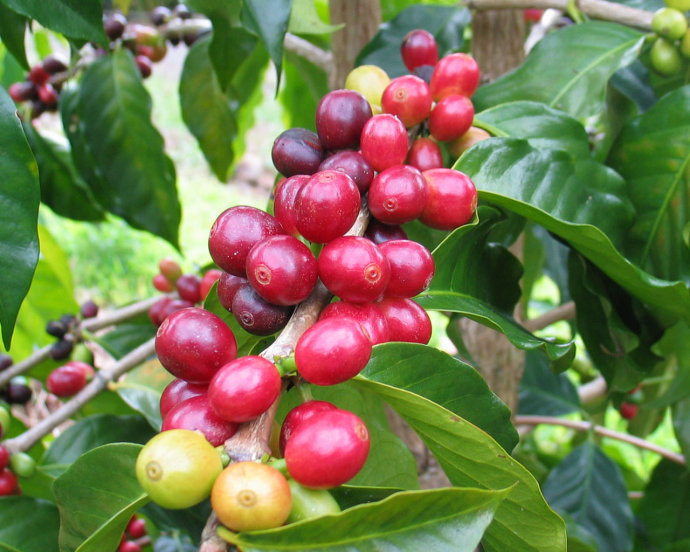
Coffee has undergone several color changes from seed to cup. The coffee tree has white flowers, and the coffee fruit is born dark green, which gradually changes to yellow in the process of ripening and finally becomes red. The raw coffee bean is wrapped in the coffee fruit, washed, dried and processed before it becomes a coffee seed wrapped in yellow parchment and then shelled and polished into jade.

Introduction to the flavor description of the baking and growth process of Pacamara raw coffee beans
How do Pacamara Raw Coffee beans roast and grow Flavor description describes the coffee production in El Salvador. In its heyday, it was once the fourth largest coffee producer in the world, but decades of civil war almost dragged down the coffee industry. fortunately, the war has stopped in recent years, and the coffee industry has come back to life. The only benefit that the civil war brought to the country of El Salvador is that the farmers left their fields desolate and failed to catch up with nearly 20 years.
[illustration] Coffee growth process
1. Seed selection, seedling planting, shaping, pruning, soil management, fertilization, pest control, flowering and fruit picking. 2. Picking can be divided into two ways: manual picking and mechanical picking. Manual picking is divided into two ways: daylighting and selective picking. High quality coffee beans can be obtained by picking.
The growth process of coffee trees (photo group)
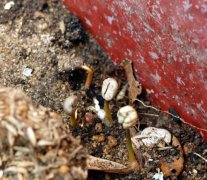
The bud that has just emerged looks like it is ready to bloom. The seed next to the beginning of the newborn life has already sprouted, two beautiful young leaves, the small bud next to it needs refueling, it will sprout and grow leaves soon. Now the bud is not high, it is estimated to be only five or six centimeters.
The process of Coffee Fruit from seed to growth to Post-harvest treatment Analysis of layered Anatomy of Coffee Bean
After the coffee flowers fade, they are replaced by small coffee fruits. The ripe coffee fruit is red and looks a bit like the familiar cherry, called coffee cherry. The freshman coffee fruit is green and turns red after ripening for about six months. After maturity, if it is not picked in time, it will slowly turn black. The color of mature coffee fruit is related to the variety, most coffee

Introduction to the growth process of coffee beans how about Dingrui brand coffee machine
Coffee beans produced by washing account for almost 70% of the total output of coffee beans. Sometimes poor treatment of fermentation time will produce fermentation odor and special sour taste; if handled well, it can form the personalized aroma of coffee beans. At this time, the coffee beans can be sent to various places in sacks or in special containers to move the fruit in the water to the pulp removal machine and peel off the skin and pulp.

A brief introduction to the growth process of boutique coffee beans
Coffee is a kind of drink, which gives the public the impression that it is black, bitter, sleepless and excited. The color of the coffee beans we see in the coffee shop is tea-brown, which belongs to roasted coffee beans, while the color of the coffee liquid is trickle color. Coffee comes from big coffee beans, and coffee beans are harvested and processed from big trees. The development of coffee

Correctly planting Coffee Tree Coffee Tree growth process Map
One of the characteristics of a coffee tree is that its fruit can bear fruit several times a year, and another is that flowers and fruits coexist at different stages of ripening. If the fruit is too ripe, the beans in it will rot. If the beans are not ripe, the beans will not ripen by themselves. So bean pickers often go through the same tree several times to find ripe fruit, but try their best.

Cultural characteristics of Brazilian Coffee introduction to the growth Environment and processing process of Brazilian Coffee
Professional coffee knowledge exchange more coffee bean information please pay attention to the coffee workshop (Wechat official account cafe_style) Coffee gives people the feeling is elegant and noble drink, its strong aroma is fascinating. Coffee used to be a luxury drink, but now it has become a popular drink during leisure or afternoon tea, and coffee is even made into all kinds of snacks.
Introduction to the structure diagram and growth process of coffee bean structure roaster
The harvested coffee berries need further treatment, usually in two ways. One is water washing, which is popular in Central America and parts of Africa; freshly harvested coffee berries separate the peel from the beans manually or mechanically, and then soak in water for 2 to 3 days. In this way, the pulp and sticky matter attached to the coffee beans will be removed. Then there is the Qing Dynasty.

Introduction to the structure diagram and growth process of coffee bean structure roaster
The harvested coffee berries need further treatment, usually in two ways. One is water washing, which is popular in Central America and parts of Africa; freshly harvested coffee berries separate the peel from the beans manually or mechanically, and then soak in water for 2 to 3 days. In this way, the pulp and sticky matter attached to the coffee beans will be removed. Then there is the Qing Dynasty.